
2023 New Orleans 9
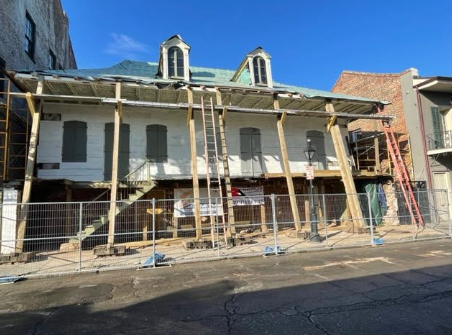
Madame John’s Legacy
Location: 632 Dumaine Street
Threat: Insensitive Alterations
Madame John’s is one of the Vieux Carré's oldest structures, dating to 1788 or earlier. It is a prime example of 18th-century Louisiana Creole architecture, and one of Louisiana’s most significant National Historic Landmarks. Having survived the Fire of 1794, this treasure faces a new threat: controversial plans for significant, inappropriate design changes. Until the 1990s, the VCC had input over state-owned buildings—but no more. Although the Louisiana Division of Administration Facility Planning has oversight, and despite guidance from the State Historic Preservation Office and the Louisiana State Museum’s independent consultant, the contractor is moving forward.

Residential Housing
Location: Citywide
Threat: Availability of Residential Housing
Designated as a local landmark, this former branch bank is a Mid-Century Modern commercial building designed in 1966 by architects Parham and Labouisse in the New Formalism style, a rare building type in traditional New Orleans. The exterior has missing or incongruous marble elements and is covered with graffiti on the building façade and perimeter wall. Once an important contributor to the Mid-City neighborhood, the landmarked building now presents a neglected and forlorn appearance that blights the prominent corner of Canal and North Broad Streets.

Adolph Mazureau House
Location: 1016 St. Louis Street
Threat: Demolition by Neglect
In 1831, prominent notary Adolph Mazureau commissioned Daniel Twogood, builder of Julia Row, to construct this complex on the edge of today’s French Quarter. This finely-designed Federal-style townhouse with its pilastered carriageway entrance, service wing, and stable, has both charmed and dismayed admirers for decades. Owned since 1909 by Mercier Realty, this landmark and other Mercier holdings have been allowed to deteriorate, soliciting frequent citations by the Vieux Carré Commission.

City Hall
Location: 1300 Perdido
Threat: Prime Location
City Hall was erected in 1957 in the administration of Mayor DeLesseps “Chep” Morrison, whose master plan for a new civic complex included a modern City Hall with a public plaza, a library, state courthouse, and a state office building located on the newly widened Loyola Avenue. The Mid-Century Modern-style façade of green-tinted windows set in a modular grid with aluminum louvres reflected the city’s post-WWII optimism. Despite the building’s architectural and cultural significance, recent administrations have shown little interest in preserving the building, while exploring relocation options—leaving the potential for demolition very real.

Mid Century Modern
Location: 1016 St. Louis Street
Threat: Demolition by Neglect
Designated as a local landmark, this former branch bank is a Mid-Century Modern commercial building designed in 1966 by architects Parham and Labouisse in the New Formalism style, a rare building type in traditional New Orleans. The exterior has missing or incongruous marble elements and is covered with graffiti on the building façade and perimeter wall. Once an important contributor to the Mid-City neighborhood, the landmarked building now presents a neglected and forlorn appearance that blights the prominent corner of Canal and North Broad Streets.

HDLC/VCC Commissions
Location: Citywide
Threat: Overturning Commission Decisions
The Historic District Landmarks Commission (HDLC) and the Vieux Carré Commission (VCC) are responsible for the preservation, protection, and regulation of the distinct architectural and historic character of the city's designated historic districts. Staff recommendations are based on professional expertise. The City Council’s frequent overturning of decisions made by the HDLC and VCC undermines the professionalism, authority, and ultimate goals of the commissions. Supporting the expert analyses and rulings of the commissions is paramount to retaining the historic integrity of our city.

Louis Armstrong Park
Location: 701 N. Rampart
Threat: Insensitive Redevelopment
Louis Armstrong Park, named for New Orleans’ world-revered native son, is home to several historically and culturally significant buildings and sites, including Congo Square—crucial in African American history and essential to the creation of jazz and popular music. As plans advance to develop a world-class cultural center within the 32-acre park, the City and the community must stay vigilant to ensure that the entirety of the site remains in public domain while reflecting the community’s vision, and is redeveloped with sensitivity and respect for the past.
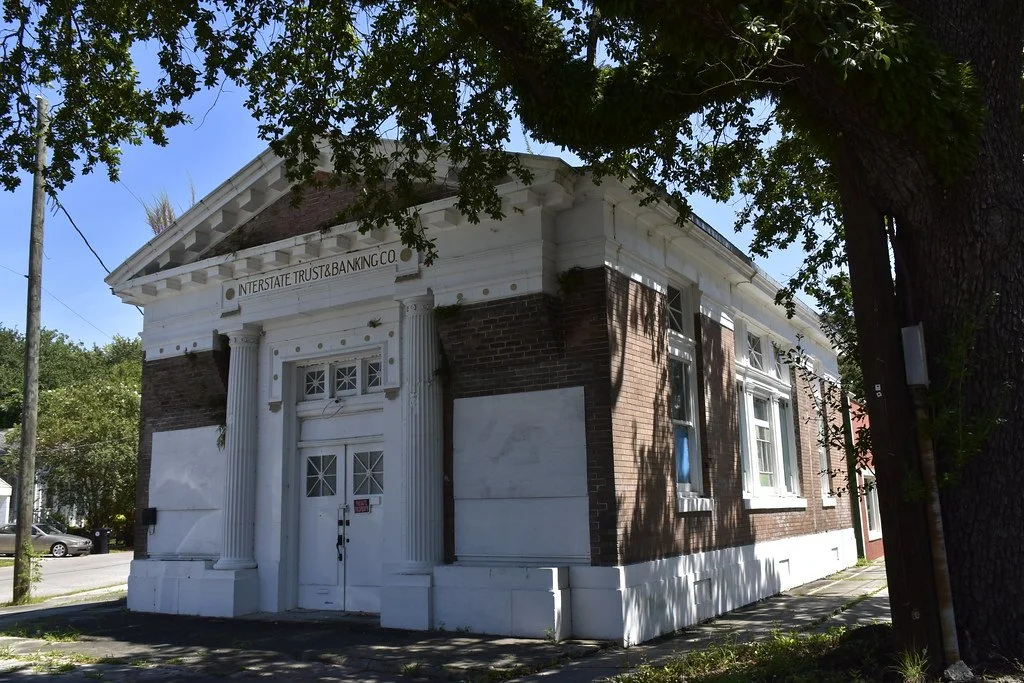
Interstate Trust & Banking Co. Building
Location: 644 Bouny Street
Threat: Demolition by Neglect
This long-vacant, architecturally significant bank building is sited on a viable commercial corridor in Algiers Point. The solid brick structure, however, suffers from the effects of water intrusion through the damaged slate roof; from wood rot; and from damage caused by rodents, termites, and the overgrowth of vines along the entablature. In addition, the original bay windows have been removed from the entrance façade. The restoration and rehabilitation of the building would enhance the historic neighborhood of Algiers Point.

Garden of the Americas
Location: Basin Street Neutral Ground
Threat: Loss of Green Space
The “Garden of the Americas” was developed in 1957 on the Basin Street neutral ground to honor New Orleans’ economic and cultural ties to South America. From Canal to St. Louis Street, the Garden features several monuments. While the failure to maintain the Garden and Simon Bolivar Plaza has long been a civic embarrassment, the site is now endangered by New Orleans Regional Transit Authority’s selection of the neutral ground for a new transit corridor bus terminal – instead of choosing less impactful alternatives such as the Union Passenger Terminal.