
106 Action Center
What is Section 106?
On October 15th, 1966, President Lyndon B. Johnson passed the National Historic Preservation Act of 1966 (pictured to the left). The act was the first step toward preserving historic character across the nation. Section 106 was a major part of this protection, allowing public comment on projects and highlighting the importance of preserving historic character. Over 50 years later, the Preservation Act of 1966 preserved and created the identity of hundreds of cities around the nation, saving historic structures from urban renewal projects.
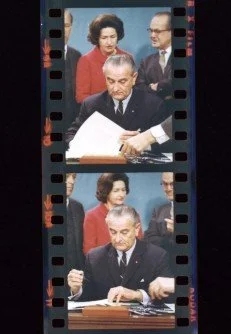
President Johnson signing the National Historic Preservation Act.
Section 106 requires federal agencies to consider how projects they fund, permit, or carry out may affect historic properties before moving forward. It gives communities, preservation organizations, Tribal Nations, local governments, and property owners an opportunity to be heard.
It doesn't stop projects. It ensures that decisions are made with a full understanding of their impacts.
Why is this important?
The most disturbing aspects of the proposal:
Federal agencies would no longer be required to try to avoid or minimize damage to America's historic architecture, neighborhoods, and landscapes.
Local impact: historic vernacular homes and structures threatened by the IHNC. in the 9th ward.
State and local governments would lose the right to be notified or to comment when a federal agency proposes to damage or destroy a historic place in their jurisdiction.
Public comment on federal historic preservation policies or actions would become entirely optional, left up to the agency's discretion.
The federal government would no longer be required to consult Tribal communities* or draw on their expertise about their own significant cultural resources.
Significant cultural landscapes would no longer count as historic properties at all.
Local impact: Long-term damage to local state parks like Fontainebleau State Park, Fairview Riverside State Park, and St. Bernard State Park. This change affects the native swamps and waterways, potentially opening them to permanent damage.
Agencies would no longer have to weigh the reasonably foreseeable consequences of their actions on historic properties — only direct physical damage would count.
The National Trust argues the proposed rules are inconsistent with the NHPA itself and would violate the ACHP's own rules and procedures.
The draft is internally inconsistent and riddled with errors, which is likely to create significant regulatory confusion and chaos.
Examples: “tangible human improvements,” “specific human activities,” “noncompact, unimproved natural features such as mountains, valleys, bodies of water, or landscapes, including ethnographic landscapes, do not qualify as property”
*Louisiana Tribal Nations affected by Section 106 revisions include: Adai Caddo Indians of Louisiana, Bayou Lafourche Band of Biloxi-Chitimachas, Choctaw-Apache Tribe of Ebarb, Clifton Choctaw Tribe of Louisiana, Bayou Lafourche Band of Biloxi-Chitimachas, Clifton Choctaw Tribe of Louisiana, Choctaw-Apache Tribe of Ebarb, Adai Caddo Indians of Louisiana, Four Winds Cherokee, Grand Caillou/Dulac Band of Biloxi Chitimacha Choctaw, Jean Charles Choctaw Nation, Louisiana Band of Choctaw Indian, Natchitoches Tribe of Louisiana, United Houma Nation, and Pointe-au Chien-Indian Tribe.
Section 106 isn’t red tape — it’s the only mechanism that gives communities, local governments, and the public a seat at the table when a federal project threatens a historic place. It rarely stops a project outright. Instead, it forces a conversation about what’s at stake and a real chance to avoid, minimize, or mitigate the damage. Take away that mechanism, and you get less transparency — and more historic places lost for good. - Sandra Stokes
What does this mean for us?
New Orleans wouldn’t be the city it is today without this process. In 1969, a planned expressway that would have cut the Mississippi River off from the French Quarter was stopped in large part because of the newly passed National Historic Preservation Act. After Hurricane Katrina, Section 106 review led to an agreement requiring Charity Hospital (pictured below) to be secured and ventilated rather than demolished — preserving the building for what’s now Tulane’s redevelopment project. And Section 106 consultation over the Industrial Canal Lock relocation, which threatens historic homes in the Lower Ninth Ward, has significantly increased the compensation and mitigation funding on the table compared to early proposals.
Under the proposed changes, community input would become optional. Notifying states and local governments would become optional. Our historic resources would be left at the mercy of the will and taste of whoever happens to be holding the pen at the time.
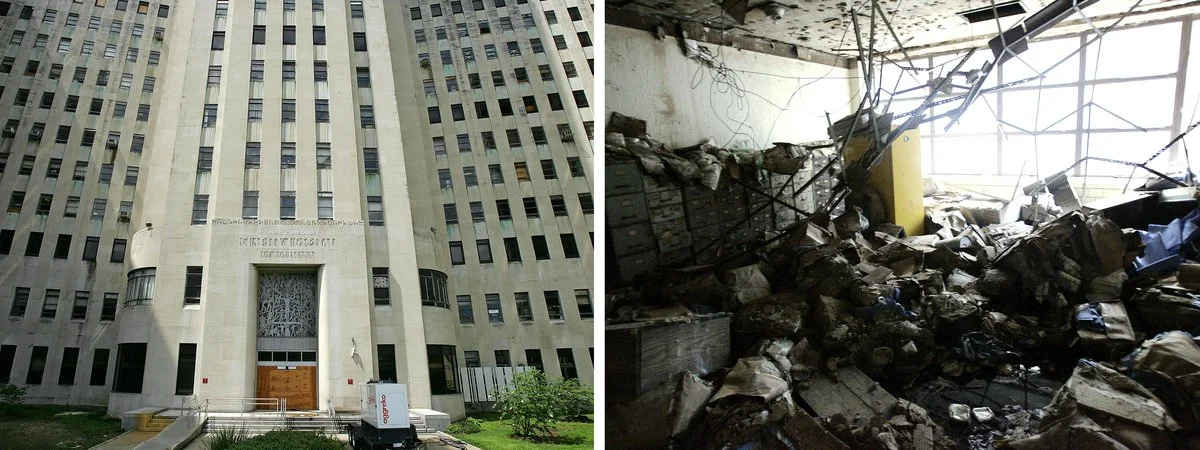
Charity Hospital via NPR, August 2015
Sample Emails and Talking Points
The core objections, explained simply
Agencies would no longer have to try to prevent damage. Right now, federal agencies are required to try to avoid or minimize harm to historic architecture, neighborhoods, and landscapes before they act. That requirement would be eliminated.
Your city or state might never find out. State and local governments currently have the right to be notified and to comment when a federal project threatens a historic place in their community. That right would disappear entirely.
Losing what Section 106 was built to do. For 60 years, Section 106 has required federal agencies to consider the effects of their actions on historic places, while giving the public a voice and empowering local and Tribal communities. This rewrite would strip away that foundation.
It could backfire. Instead of the speed and certainty the rule promises, it will likely cause more delays and more lawsuits, as agencies and applicants face legal challenges over a weakened process.
Loss of tourism. New Orleans is economically dependent on tourism. In 2024, New Orleans and Company announced that visitation to the city had finally rebounded since COVID, bringing in 19 million tourists. This financially brought the city $10.4 billion. The tourism industry alone brings in 80,000 jobs as of 2025. A large draw for this tourism industry is the historic St. Charles Streetcar, the French Quarter, Magazine Street, and other local corridors. Section 106 revisions threaten the longevity of the tourism industry if historic properties are targeted for advancements.