Life Along the Bayou
1799
Built in 1799 by Spanish merchant and ship owner, Bartholome Bosque, during the Spanish Colonial Period, The Pitot House has witnessed centuries of cultural history. Eleven families occupied the house; Missionary Sisters of the Sacred Heart used the home for a convent; and preservationists have cherished the building for its architectural beauty and historical significance.
The Pitot House site is located on the area’s oldest European settlement, founded 10 years prior to Jean-Baptiste Le Moyne de Bienville’s founding of New Orleans. In 1708, Bienveille granted land along Bayouc Choupic to several Frenchmen from Mobile, then the seat of government for the Louisiana colony. Despite efforts to grow wheat and tobacco, they had no understanding of marshy soil conditions. Only Antione Rivard de Lavigne, upon whose 2-1/2 arpents the Pitot House stands, remained and cultivated farmland.
The Pitot House is interpreted to the period of James Pitot who purchased the house in 1810 from impressionist painter Edgar Degas’ great-grandmother, Mme. Marie Tronquet Rilliuex.
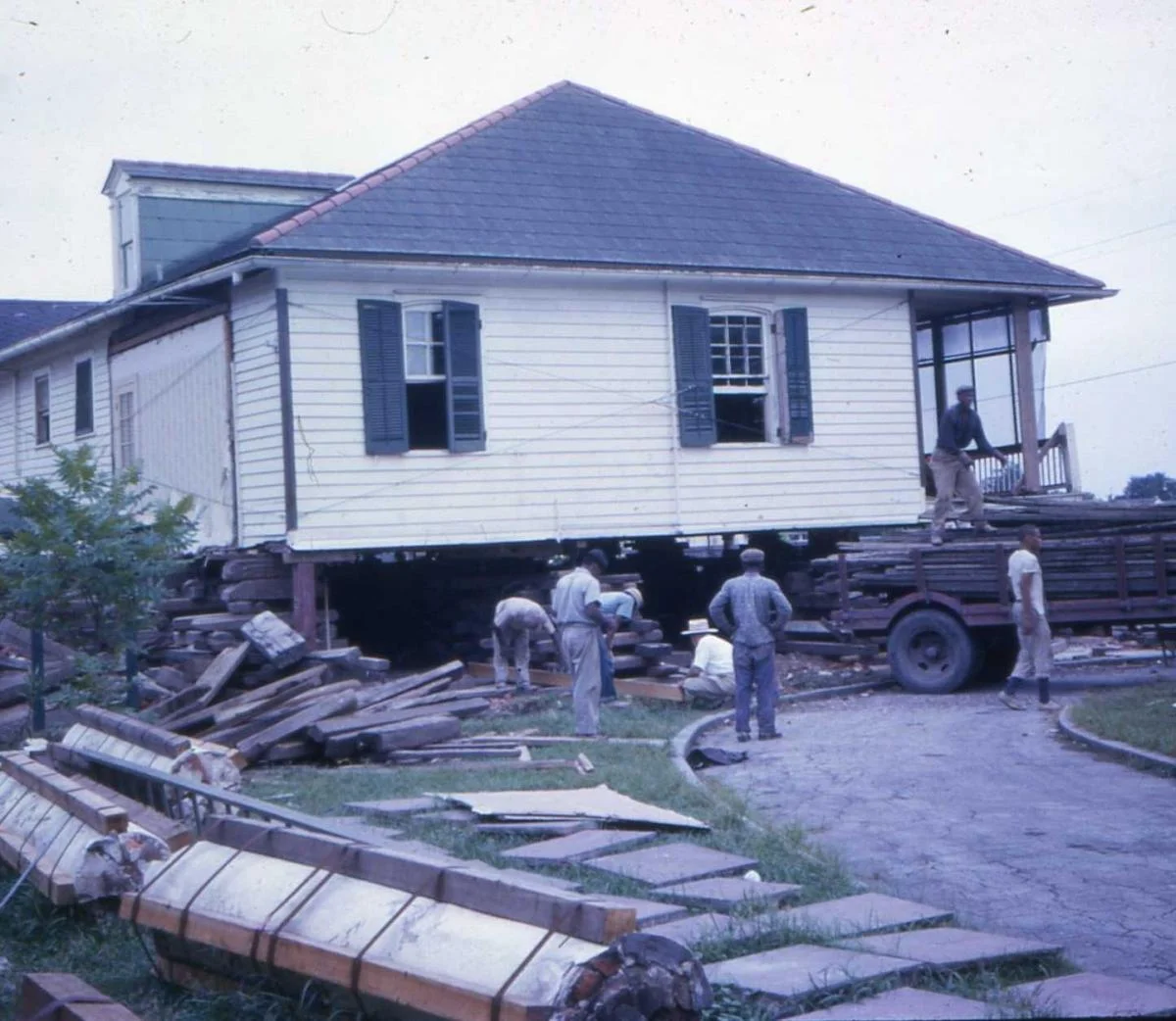
Pitot House Move
The Missionary Sisters of the Sacred Heart, founded by Mother Frances Xavier Cabrini, owned The Pitot House starting in 1904, but needed land to build a Catholic high school for girls. They offered to give both the Pitot House and the adjacent Tissot House to the city or to Louisiana Landmarks Society, assuming the structures could be moved. Thus, Landmarks, led by its President Harnett T. Kane, raised the necessary funds to move only the Pitot House on July 21st, 1964. The Pitot House was moved in order to save it from demolition, but sadly, the Tissot House was not able to be saved. The brick-between-posts and hipped-roof house was moved on flatbed trucks 220 feet from the current location of Cabrini High School to 1440 Moss Street. Most of the plastered brick columns were moved intact, and ground-floor masonry was rebuilt with bricks and concrete blocks.
The relocated second floor was jacked up to sit on a new foundation and first floor. While two columns were lost, they were replaced with new material. This one-day move by Abry Brothers, Inc., uncovered elements of the original fabric, which helped guide the restoration of the house.
Nine years later, the house was restored to its original architectural splendor. The house is furnished with Louisiana and American antiques, dating from the early 1800s through mid-19th century. In 1971, the Pitot House was placed on the National Register of Historic Places.