1
2
3
4
5
6
7
8
9

Holy Cross School
Location: Holy Cross Neighborhood
Threat: Demolition by neglect/ lack of code enforcement
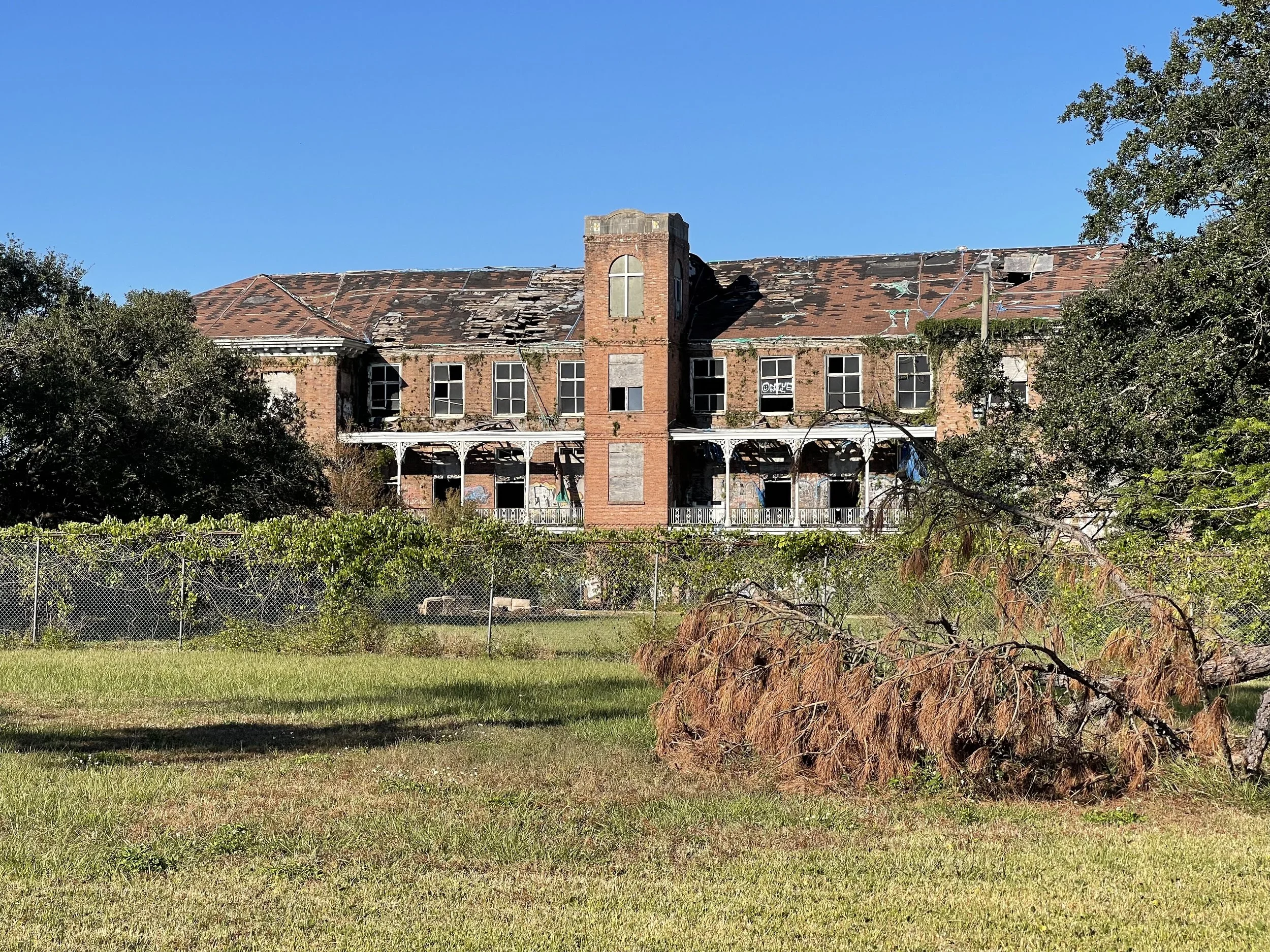
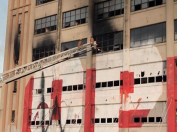
Designed by famed architect James Freret, this 1895 building is the last surviving building of the Holy Cross institution for which the Holy Cross neighborhood is named. Since 2012 the developer has promoted the building would be rehabilitated as the centerpiece for a redeveloped site. Even then, the project was controversial as the community opposed re-zoning the property to accommodate plans for two massive towers. in 2014 Louisiana Landmarks Society named the district to its NO9 Most Endangered Sites list when it was threatened by the out-of-scale plans. Eight years later, plans for the towers have been lowered- but the building continues to deteriorate. Teh owner now refers to the property as a “burden: as the roof and interior areas have been allowed to partially collapse. With no solid plans to begin the redevelopment, the Holy Cross building sits in real danger of collapse- a fate suffered last year by the historic Semmes School just blocks away.
B. W. Cooper, Surviving Buildings
Location: 1117 South Galvez Street
Threat: Disuse; Waste of needed resources
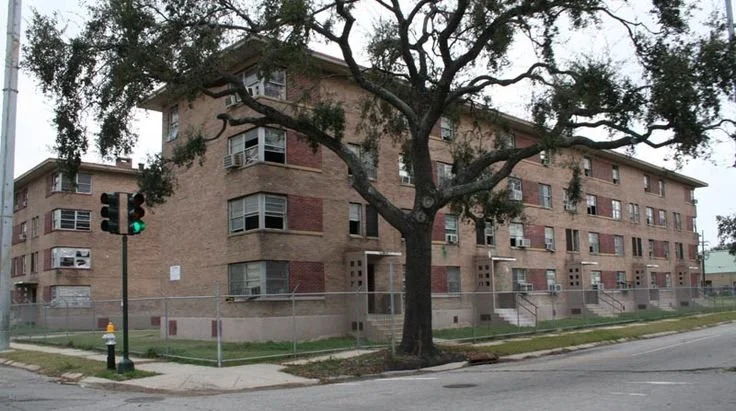
Three vacant brick buildings are all that remains of teh B.W.Cooper Housing Development. Built in 1939-1941 for teh US Housing Authority and its local counterpart, teh Housing Authority of New Orleans, it is perhaps better known as calliope. B. W. Cooper was one of foru New Deal era developments targeted for revitalization in the wake of Jurricane Jatrina. A demolish-and-rebuild, mixed-income model similar to that used at the St. Thomas development before the strom carried the day, as agencies in 2007 agreed to demolition of all but these remaining structure. This March, six years after the demolitions, HANO issued an RFP for final phase of redevelopment, which included these sturdy brick structures- but a developer has yet to be selected. Economic problems resulting from COVID-19 has worsened the already acute problems of housing insecurity in New Orleans. Fast Tracking the redevelopment can provide homes for many in need.
French Benevolent Society Tomb
Location: 2110 Washington Avenue
Threat: Deterioration from abandonment and neglect
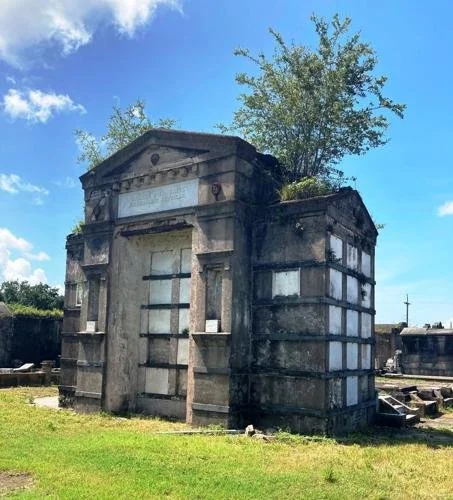
Prominent among the extraordinary assemblage of tradesmen society tombs in Lafayette Cemetery No. 2 is the imposing, 40 vault c. 1872 French Benevolent Society of Jefferson Tomb. It stands as n architectural and cultural remnant of the working-class benevolent society founded in 1868 in the former City of Jefferson. The tomb serves as the final resting place of 150 new Orleanians of French ancestry, including many children. With membership declining, the society merged with the French Benevolent Society of Orleans in 1901. After celebration of its centennial in 1943, the merged society began its own decline and dissolved in 1972. The end of the French society left the tomb orphaned and abandoned, resulting in long-term neglect and deterioration, with damaging tree growth from the roof. Reconstitution of the society may be possible, allowing for a return to active ownership and tomb restoration and maintenance.
1860's Cottage St. Andrew Street
Location: 2315-17 St. Andrew Street
Threat: Demolition by neglect
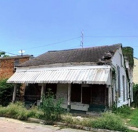
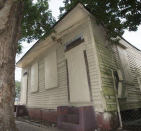
With the J. H. Keller Soap factory nearby, this 1860’s cottage was likely constructed to help meet workers’ housing needs. This serviceable double received a tow story rear addition in the late 19th century. Advertisements confirm the building was primarily leased for rental income until the 1950’s when it was purchased by the first known owner-occupants. Post-Katrina photos taken as part of a FEMA survey of the Central City National Register District suggest the home was in better condition at that time then the situation today, with windows boarded and vines climbing the weatherboards. The out of state owner sought demolition in 2018 but later withdrew the application. Neighborhood advocates fear it will suffer demolition by neglect or be sold to an investor not interested in a historically sensitive rehabilitation. However, it could qualify for both state and federal tax credits.
French Quarter Residential Streets
Location: French Quarter
Threat: Limitation of street usage
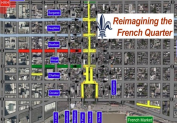
New Orleans was a scattershot collection of cabins in 1721 when engineer Adrien De Pauger drafted a six-by-eleven block grid of streets centered around a church on an open square fronting the Mississippi River. Streets designed to accommodate horses, wagons, carriages, streetcars and automobiles are now being converted into tourist oriented “pedestrian malls” Pedestrian malls already exist at Jackson Square and on Royal and Bourbon Streets where the City has shown an inability to manage rampant problems of crowding, illegal vending, relentless noise and accumulated waster. City Hall now proposes to close multiple streets for additional pedestrian malls. further restricting personal vehicles, delivery trucks, and emergency vehicles would hinder the viability of the quarter as an authentic mixed-used neighborhood and contribute to additional residential population decline. The Vieux Carre should be protected as a genuine, functioning historic neighborhood.
University Area Housing
Location: University area neighborhood
Threat: Losing homes to high-end student housing
In an alarming disruption of the housing market similar to short term rentals, developers are purchased small, historic residential properties in the University Area, adding as many as ten bedrooms, and converting them into monstrous, high-end dormitory suites. The unites are then rented to college student for about $1,500.00 a month per bedroom. Maximizing the number of bedrooms is the driving design principle, overwhelming the lots and the architectural style. Once converted, the former cottages become unusable for permanent residents, while high profit margins allow developers to outbid locals, aggravating the housing shortage, and interfering with the long term relationships essential to healthy neighborhoods. Because the developers are packing 10-12 bedrooms into 30-foot lots, the existing on-street parking shortage bedrooms into 30-foot lots, the existing on street parking shortage is exacerbated. In an attempt to slow the loss of housing stock, Councilmember Giarrusso fought for a temporary moratorium. Potential long-term solution includes tying intensifications to homestead exemptions, requiring more common living area, increasing assessments on intensive conversions, enhancing parking regulations, and changing zoning regulation and the level of HDLC oversight.
Buddy Bolden Home
Location: Central City
Threat: Demolition by neglect
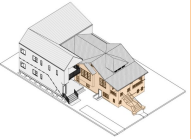
Other than the state asylum where he lived out his years, the only known home of pioneer jazz trumpeter Charles “Buddy” Bolden was 2309-11 First Street. The modest double shotgun was purchased by Greater St. Stephens Full Gospel Baptist Church in 2008. Understanding its provenance and city landmark designation, preservationists and music aficionados saved the building from the wrecking ball after the church filed for demolition, only to have it continue to be cited for various code violations. Subsequently, musician P. J. Morton, son of the church ministers, formed a non-profit with plans to preserve the building as a museum and convert an adjacent double into a recording studio and facility for aspiring musicians. Yet the building still remains vacant and can adjacent building also owned by the church burned in April. Bolden’s former home continues to languish in an even more forlorn setting, with fears of further deterioration-or worse.
St. Alphonsus Church
Location: 2030 Constance Street
Threat: Severe deterioration
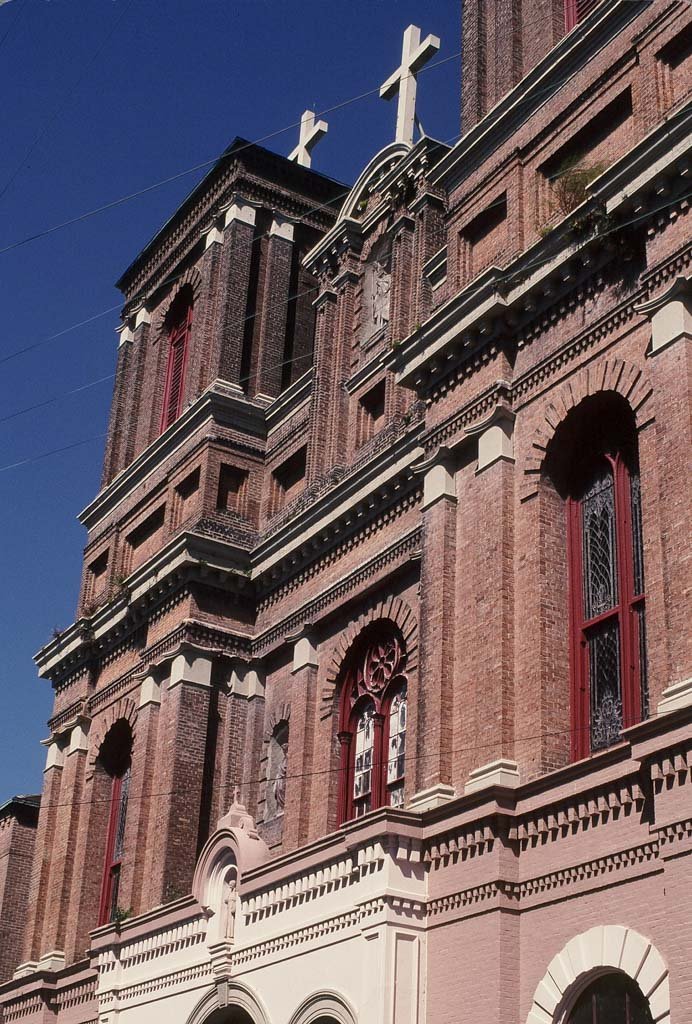
Designed by architect Louis L. Long and constructed by the Redemptorist Fathers and parishioners between 1855 and 1857, St. Alphonsus Church is listed on the National Register of Historic Places. The building has been home to an eclectic group, including Irish Catholics, the homeless, pigeons and museum visitors. Now no longer a consecrated church, the Saint Alphonsus Art and Cultural Center hosts creche scenes, St. Joseph altars and other exhibits. Since 1990s, the Friends of St. Alphonsus have worked to preserve the structure and repair the accumulated damage from years of deferred maintenance. But the needs are vast. The exterior envelope needs to be sealed, the roof needs replacement, the walls need repointing, and the stained-glass windows need restoration. Inside the plaster walls and stunning fresco ceilings are crumbling and falling off the wooden lath skeleton. Eligible for historic tax credits, the building could be sold and redeveloped.
Safety and Permits/ Code Enforcement
Location: Citywide
Threat: Lack of inspections and enforcement
To ensure public health, safety and welfare, municipal code enforcement is necessary. In recent years, New Orleans’ Safety and Permits Department enforcement has encountered obstacles such as underfunding, lack of capacity to carry out duties, the city’s 2019 cyberattack, and disturbing irregularities revealed by the collapse of the Hard Rock Hotel. Now, consequences of the pandemic will force more budget cuts. Adding to the concern is the potential for the long-held mission of the department to be compromised by the recent administrative restricting that may view residential communities as economic drivers. some developers and property owners take advantage of the reduced services, threatening the safety of citizens and the workforce, the residents’ quality of life, and structural integrity of our buildings. improved inspections and enforcement safeguard much needed predictability, safety and values while providing the added bonus of increased revenue stream form the city with the collection fines.